Scroll
CLUBE
da
ESQUINA
"It shouldn't have worked. It worked."
A rented house by the ocean in Niterói. Sand drifting through open windows. A group of friends from the hills of Minas Gerais — Milton Nascimento, Lô Borges (barely twenty), Beto Guedes, Toninho Horta — holed up for six months to record something no one had attempted in Brazil: a double LP, twenty-one tracks, everything they had.
The sound was everything at once: bossa nova harmonies flowing into jazz improvisation, baroque pop counterpoint dissolving into Chopin nocturnes, Beatles-influenced psychedelia layered over Minas Gerais regional folk, Andean flutes meeting electric guitar. Eumir Deodato and Wagner Tiso arranging. Paulo Moura conducting strings. The whole thing held together by the warmth of people who grew up on the same street corner.
At release, critics didn't know what to make of it. Decades later, the rest of the world caught up. Paste Magazine ranked it among the 300 greatest albums ever made — the highest-placing album not sung in English. In Brazil, it was voted №1 of all time.
"It was never a place. It was these people."
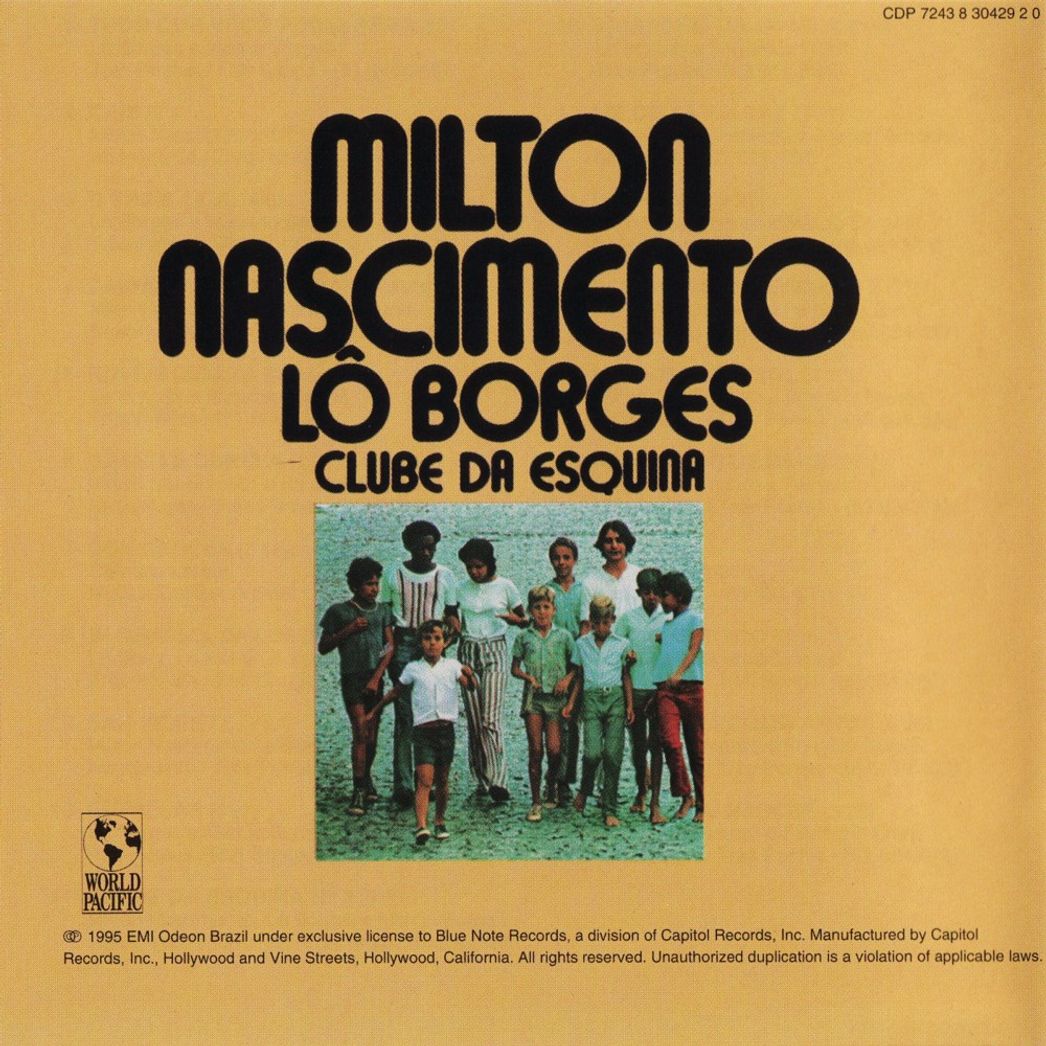
The name came from a mother's exasperation. Lô Borges and his friends were always hanging out at the intersection of Rua Divinópolis and Rua Paraisópolis, in the hillside neighborhood of Santa Tereza, Belo Horizonte. The Borges family home had become an open salon — musicians, poets, filmmakers drifting in and out at all hours, playing records, writing songs, arguing about everything.
"Ah, Lô is on the corner — he never leaves — at the place they call Clube da Esquina." Dona Maricota Borges, Lô's mother
It was a teasing name — a dig at the elegant social clubs of Belo Horizonte, the country clubs where the bourgeoisie spent their weekends. These kids had no membership card, no building, no charter. They had a street corner, a guitar, and each other. By the time they walked into the studio in 1972, they'd been making music together for years — and it shows in every track.
"It isn't them. And it isn't here."
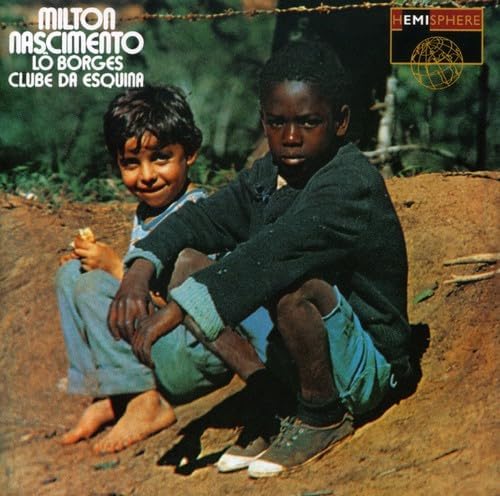
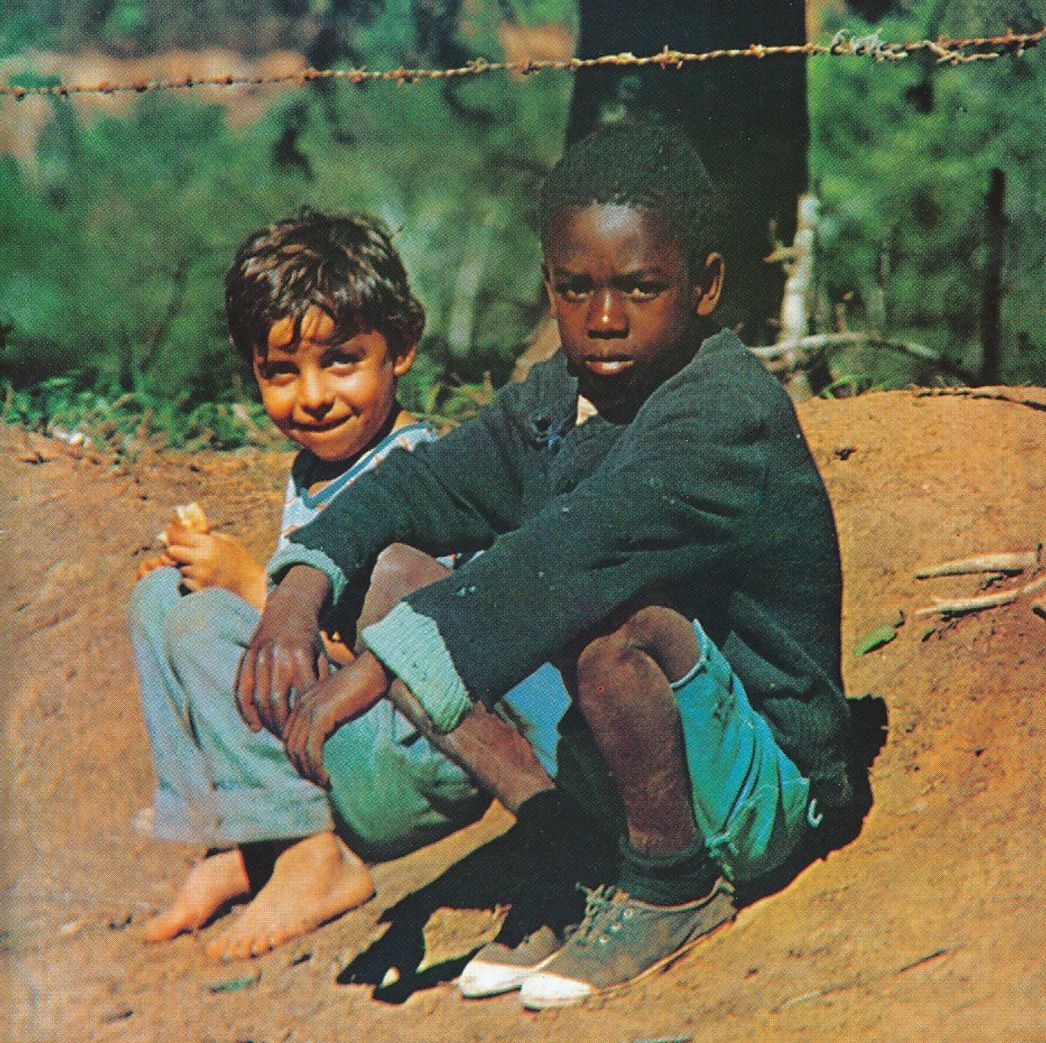
The two boys on the cover are not Milton and Lô as children. They never were. The photo was taken by Cafi (Carlos da Silva Assunção Filho) from the window of a Volkswagen Beetle on a dirt road in rural Rio de Janeiro state, near Nova Friburgo. Ronaldo Bastos — the lyricist, the poet of the group — was driving. They were looking for an image that felt like the music: two people, a road, the horizon, and nothing else.
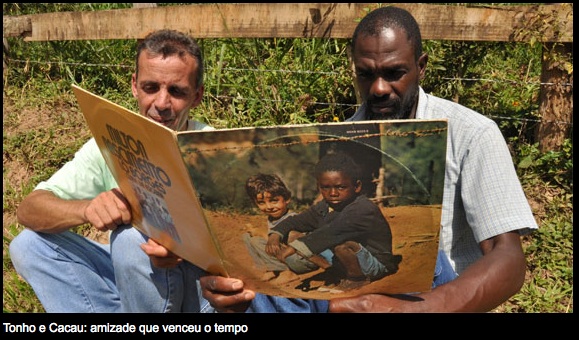
Tonho and Cacau, 2012 — the boys from the cover, forty years later
In 2012, on the album's 40th anniversary, a journalist tracked the boys down. Tonho (Antonio Rimes, 7 years old in the photo, on the left) and Cacau (Antônio Carlos Rosa de Oliveira, 8, on the right). They had grown up on that road. They had no idea, for decades, that their image had become one of the most recognized in Brazilian music.
"I was sure it was me. I bought a copy because the LP wasn't available anymore. I just wanted it as a keepsake." Cacau (Antônio Carlos Rosa de Oliveira), 2012
"You've probably heard it without knowing."
In the 1980s, Pat Metheny and Lyle Mays flew to Brazil to find the "Corner Club." They asked around, expecting to be taken to a venue, a bar, a recording studio. Someone told them: it wasn't an address. It was these people. Metheny would call Milton Nascimento "the most important musician on the planet."
Wayne Shorter recorded an entire album (Native Dancer, 1975) with Milton. Earth, Wind & Fire covered their songs. Paul Simon sought them out. Esperanza Spalding, Devendra Banhart, Snarky Puppy — all trace lines back to this corner. Whenever you hear jazz guitar with a particular warmth, a certain openness to folk melody and orchestral lushness at the same time — there's a good chance it flows from here.
Today, the intersection of Rua Divinópolis and Rua Paraisópolis is a pilgrimage site. There is a bench. There is a calçada da fama — a sidewalk of fame — with the names set into the pavement. In 2011, the Museu Clube da Esquina opened on the corner, preserving instruments, lyrics, photographs, the whole scattered archive of a generation.
On November 2, 2025, Lô Borges died at 73. That night, without anyone organizing it, people began gathering on the corner. Someone brought a guitar. They sang O Trem Azul together — a show congregacional, a congregation of voices in the dark, on the same sidewalk where it all started sixty years earlier.
"Nectar. An oasis." Toninho Horta
A small surprise to close on, since we're listening to this in Seattle.
The kinship between Clube da Esquina and the indie folk scene that came out of the Pacific Northwest in the 2000s is not as far-fetched as it sounds. Both grew out of regional collectives — friends, neighbors, families making music together away from the center. Both treated layered vocal harmony as a lead instrument rather than an ornament. Both leaned into baroque, orchestral arrangements that refused to sit inside a genre. And both carried a particular kind of melancholy about place — the sense that where you're from is something you sing your way back to.
Robin Pecknold — born and raised in Seattle, the songwriter behind Fleet Foxes — has been openly in love with Brazilian music of the late 1960s and early 1970s for years. He's name-checked Luiz Bonfá, Tropicália, the broader Brazilian songbook. When you listen to Helplessness Blues or Shore with the Clube records in your ear, the family resemblance is unmistakable: the same patient unfurling of melody, the same way harmonies stack like light through trees, the same refusal to hurry.
There's an older bridge too. In 1972, the jazz saxophonist Wayne Shorter caught a Clube da Esquina concert in Rio, was transfixed by Milton's voice, and brought him to the U.S. to record Native Dancer in 1975 — the album that first opened American ears to this music. The current generation of Seattle and Brazilian musicians (Pecknold has collaborated with São Paulo's Tim Bernardes, a direct heir to the Clube sound) is just the latest turn of a conversation that has been going for fifty years.
The corner is in Belo Horizonte. But on a clear night, if you listen carefully, you can hear it from here.